Article
Important Tips for Reducing Vulnerabilities and Protecting Your Online Data
9 MAY 2022
/
2 min read
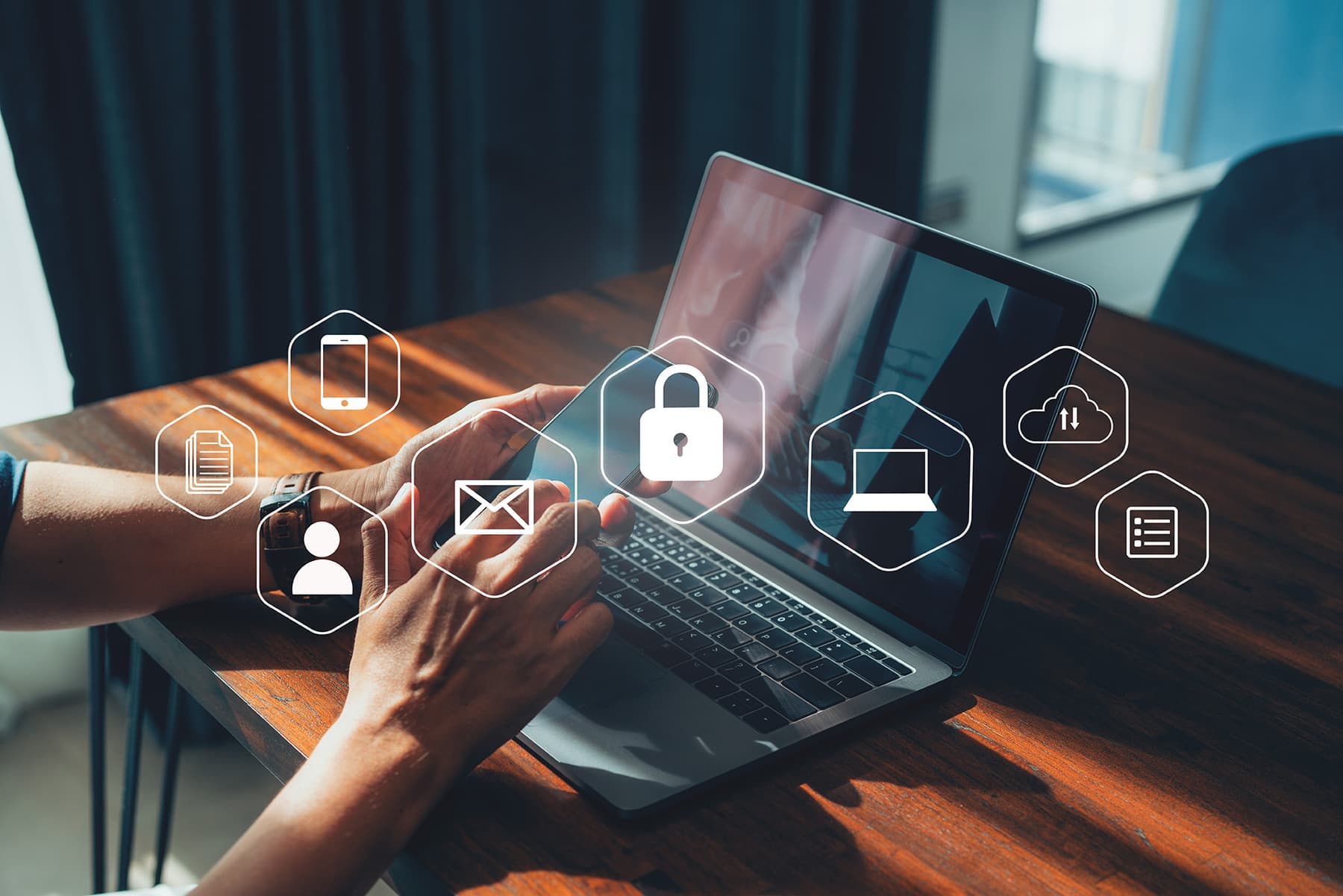
In today’s increasingly interconnected world, cyber hygiene is becoming essential in our everyday lives. Good social media and cyber hygiene not only help to protect you and your family online but also protect your data amidst an unprecedented rise in cybercrime activity. Adopting the following practices can reduce your cyber vulnerabilities.
Password Security and Multifactor Authentication
- Use strong passwords, and don’t reuse the same password for multiple accounts. Strong passwords are ideally longer than eight characters and include upper- and lower-case letters, at least one number, and one special character.
- Consider using a password manager to ensure a complex password combination to avoid falling victim to brute force attacks. Password managers can help with generating, storing, and managing all passwords in one online account.
- Important accounts, such as emails, banking apps, and social media accounts, should be protected with multifactor authentication.
Your Devices
- Important data should be backed up regularly to avoid data loss if the hardware is stolen.
- Protect your devices with a password, pin, or biometric features such as fingerprint or facial recognition, and ideally in combination for added security.
- Activate features to remotely delete data if the device is lost or stolen.
- Regularly update the operating system and applications software and firmware and use reputable antivirus solutions to protect your devices and digital environment from cyberattacks and malicious software.
Online Habits and Social Media
- Review your social media privacy settings to ensure your information is well protected and unavailable to potential attackers.
- Avoid posting or uploading personally identifiable information (PII), such as your address, date of birth, birthday, or PII document details on social media or the web.
- Avoid clicking suspicious links found on the web, social media, and in emails and SMS, or downloading and opening unfamiliar documents. Verify the senders’ credentials prior to opening by right-clicking over the sender’s address.
- Be vigilant when receiving suspicious SMS texts, emails, and phone calls asking for your personal information or to verify passwords, pins, and codes to access your online accounts or transfer funds.
In Public
- Avoid using public Wi-Fi networks. If you need to use unsecured Wi-Fi networks or are traveling to jurisdictions with the threat of online surveillance or data theft, utilize a reliable VPN solution.
- Consider a device privacy screen when using your devices in public to avoid shoulder surfing.
Crisis24 provides in-depth intelligence, planning, and training, as well as swift and actionable responses to keep your organization ahead of emerging risks. Contact us to learn more.
Related
Tags
Sharpen your
view of risk
Subscribe to our newsletter to receive our analysts’ latest insights in your inbox every week.
Intelligence & Insights
Intelligence
Worth Gathering
Employing a team of 200+ analysts around the world, Crisis24 is the only source you need for on-point, actionable insights on any risk-related topic.

Intelligence Analysis
Health Risks for the Milano Cortina Winter Olympic Games in Italy
The Winter Olympic Games in Italy occur amid high circulation of contagious seasonal and vaccine-preventable diseases.
By Jade Smith
February 12, 2026

Whitepaper
Cyber Risks in 2026: What Security Leaders Need to Know
Cyber risks in 2026 will intensify as AI cyber threats, identity attacks, and critical infrastructure targeting converge globally.
By Jonathan Vincent, Cyber Intelligence Manager
February 10, 2026

Case Study
Coordinated Intelligence Operations During the Tanzania Electoral Crisis
Crisis24’s coordinated intelligence and on-the-ground support enabled safe evacuations during Tanzania’s election unrest. See how precision planning protected clients.
February 5, 2026

Intelligence Analysis
Iran Faces Rising Internal Sabotage Risks as Regime Avoids External Escalation
Explosions across Iran underscore rising internal sabotage risks, prompting increased security measures as Tehran seeks to preserve deterrence without external escalation.
By Crisis24 Middle East Team
February 3, 2026