Explore Elite Risk Management Services

Private Strategic Group

Article

Maritime Security: Global Crises Converge on the High Seas

21 JUL 2026

/

6 min read


shipping container in shipping lane

During the pandemic, shipping recaptured the world's attention, and people were reminded how interconnected global supply chains are and how much economies depend on maritime trade. Once the disruption eased, the lesson faded almost as quickly as it had arrived, and it has taken the events of the past couple of years to bring it back.

The maritime security community, however, never had the chance to forget, and it has spent those years watching the pressures build. 

An Environment Defined by Escalation

Geopolitical tensions, conflicts, tariffs, embargoes, and sanctions have all expanded in scale and reach over the last decade, and the effects often show up first at sea. Maritime risk spans the physical, geopolitical, operational, and regulatory domains at once. In 2022, the world’s supply of cereal crops and fertilizer was threatened until the UN brokered the Black Sea deal, and European nations had to look to maritime routes to replace imports of gas and oil from Russia. Now, Ukrainian attacks on Russian-linked tankers threaten ports, vessels and shipping routes, driving up security and insurance risks with each escalation, while piracy has resurged in key transit zones, putting people and operations at risk. Ashore, port disruptions, protests and regional instability add further strain. As nations recognize the criticality of ports within their national infrastructure, terminal operators face growing threats from criminal and state-sponsored groups using drones and cyberattacks to undermine their resilience.

The compliance challenge has grown at a similar pace. Sanctions exposure and shadow fleet activity now sit alongside piracy and armed conflict on the risk registers of ship owners, operators, insurers and the law firms that advise them. GPS spoofing and jamming interfere with navigation and vessel safety, while AIS interference, once a technical nuisance, has become a persistent operational problem. Distinguishing genuine vessel behavior from anomaly, and clean trade from sanctions exposure, is consuming daily analytical work.

What makes our current moment different is that none of it stays local. For example, expanded sanctions on Venezuela alter trading patterns thousands of miles away in the Indian Ocean. Strikes on Russian-linked vessels have effects that reach the coast of Africa and the Mediterranean. Commercial deals in Central America are impacting trade flows in China. Regional events now produce global consequences faster than older risk models were built to handle, and when the disruption arrives, it hits cargo movement, business continuity, insurance exposure and reputational resilience all at once.

When Crises Stop Staying in Their Lanes

There is a term that captures this emerging dynamic: the polycrisis. Shocks once reliably arrived one or two at a time and could be managed that way, but crises across the geopolitical, economic and security domains now interact, feed each other, and produce outcomes greater than the sum of their parts.

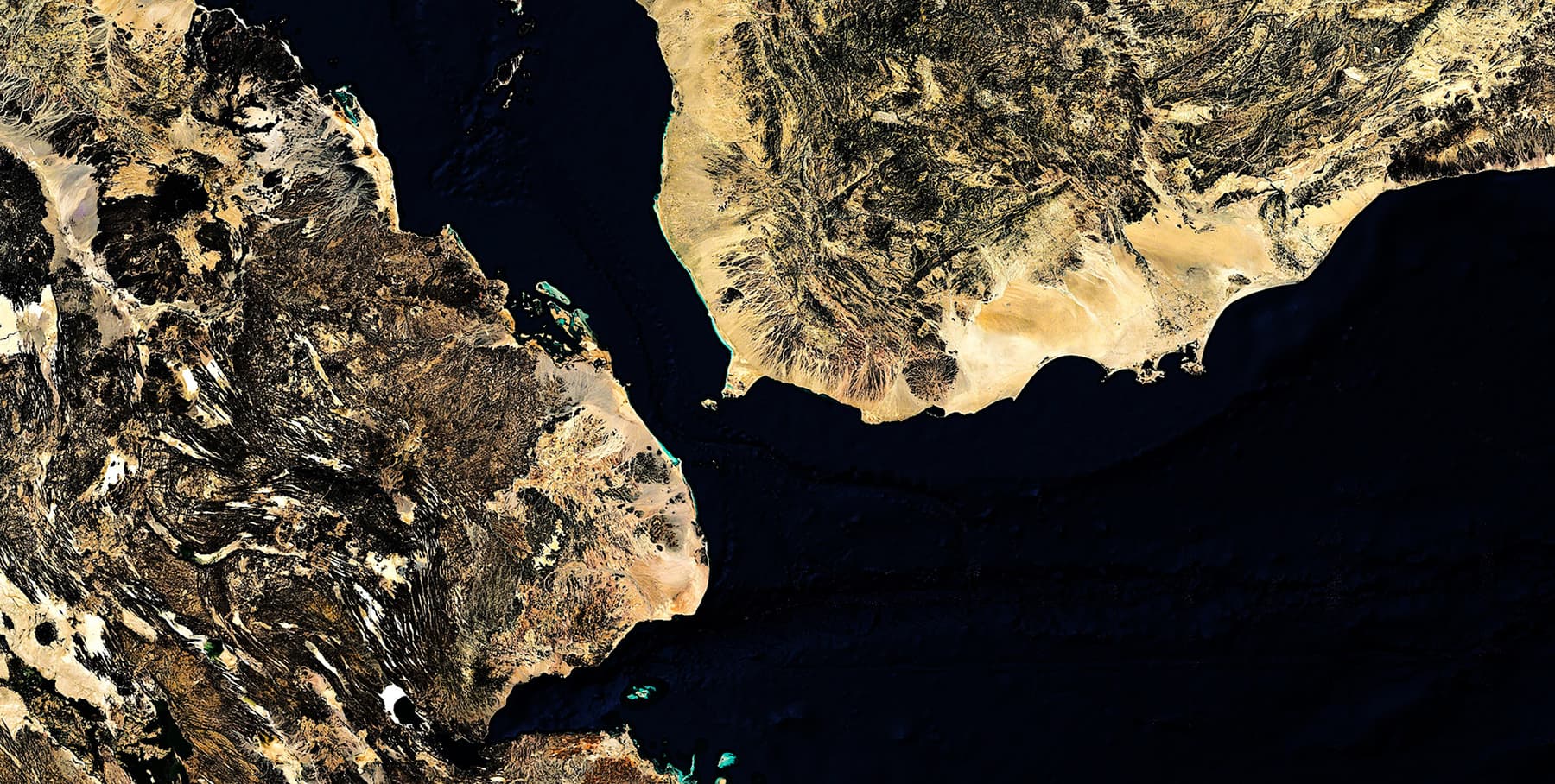
The standoff between Washington and Tehran is the clearest live example, and it is playing out largely at sea. What began as a regional confrontation now drives global instability, with the Strait of Hormuz as the pressure point. Even limited disruption moves energy prices, freight rates and insurance costs together, and the effects run downstream into food supply. Crisis24 analysts assess that costlier fuel and fertilizer could leave some 45 million people across the world's poorer countries facing severe hunger. Gulf ports and logistics hubs are within reach of asymmetric attack, and Beijing has instructed its refiners to disregard sanctions on Iranian crude, a sign that global trade is fragmenting into parallel systems. In previous periods of heightened tension, naval forces have been able to play a de-escalatory role; for example, by clearing mines or escorting neutral ships. In the current conflict, however, such confidence-building measures have been absent. Few people predicted the sudden, recent rise in piracy off the Somali coast, after years of relative absence of this threat, as a second order effect of the regional instability. All of this lands on a global economy that has deferred more pressure than it has resolved, and a stalemate between two governments has become a condition every ship owner and insurer now has to plan around.  

This is what convergence looks like, and the maritime domain sits at its center. Sea lanes are the connective tissue of the global economy, so a sanctions decision, a regional conflict and a commodity squeeze that once played out separately now meet in the same waters, on the same routes, and often aboard the same vessels. Instability at sea is likely to persist for months whatever happens with any single flashpoint, and the practical response is to build plans that assume the disruption lasts, instead of waiting for conditions to settle. 

The Gap Is Rarely Awareness

Ship owners, operators, insurers and their advisers understand these waters well, so the pressing issue is determining how the pieces do (or should) fit together. Too much maritime information arrives late, fragmented, or without the operational context needed to act on it, and insurers expect trusted validation and escalation support behind every alert. The environment calls for real-time intelligence, rapid validation and operational support working as a single system: live vessel tracking and behavioral analytics feeding human analysis, intelligence delivered direct to ships at sea, sanctions exposure monitored continuously, and response teams ready when prevention fails. Genuinely integrated consulting and real-world response capability remains rare, and it is exactly what this environment requires.

Why Breadth and Reach Matters

At Crisis24, our maritime security and risk management practice has grown alongside these risks. Our experience runs back more than three decades, across Somalia, the Gulf of Guinea, Southeast Asia and the world's other high-risk waters, and across the full arc of a crisis, from monitoring and intelligence through consulting to response. Our new Maritime Operations Center in Manila anchors that work around the clock. The breadth matters, because converging crises do not respect the boundaries between disciplines, and neither can the people managing them. That kind of judgment is built case by case, every day. Learn more about Crisis24's maritime services and risk management capabilities

Sharpen your 
view of risk

Subscribe to our newsletter to receive our analysts’ latest insights in your inbox every week.