Intelligence Analysis
US Ramping Up Pressure on Venezuela, Signaling Possible Escalation
13 NOV 2025
/
3 min read
Author
Intelligence Analyst II, Americas

Key Takeaways:
The US continues to increase its military assets deployed in the Caribbean region, allowing it to execute targeted aerial strikes on Venezuela with little to no warning.
The current rhetoric out of Washington remains ambiguous, leaving the US with a range of possibilities with which to exert pressure on Venezuelan President Nicolás Maduro.
If the US opts for action against Venezuela, foreign nationals will be left with no good options through which to safely leave the country.
There are growing signs that Washington is incrementally positioning its national security assets to topple Venezuela’s President Maduro, should it see fit to do so. Such a move could place foreign nationals in Venezuela at risk of being caught in the crossfire of an armed intervention.
Washington’s public focus on Venezuelan trafficking, despite limited supporting data, appears aimed at delegitimizing the Maduro government and framing it as a transnational criminal threat, sustaining momentum for coercive diplomacy and potential regime change measures. The recent announcement of renewed US covert action authorities targeting the Maduro government suggests that drug allegations may serve as both legal and political predicates for broader pressure options. However, domestic political dynamics may shape how far the administration is willing to climb the escalation ladder.
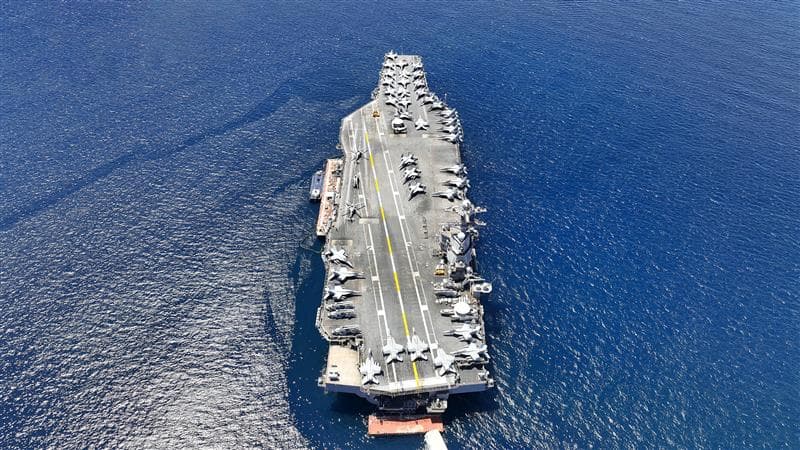
The US is well-positioned to execute an overwhelming aerial campaign against Maduro and continues to increase its military assets deployed in the Caribbean region to further bolster its sizable naval presence. The aircraft carrier USS Gerald R. Ford is now in the US Southern Command area of responsibility and will likely be off the coast of Venezuela in the coming days. To date, the US has approximately 10,000 military personnel deployed in the region, with approximately 4,500 on various naval craft and 5,500 stationed at bases in Puerto Rico. The USS Ford and its escorts will bring approximately another 5,000 sailors into the region. The US armed forces already have the ability to conduct limited military strikes on Venezuela with the assets currently stationed in the region. With the arrival of the USS Ford, that ability will only increase.
US Keeping Options Open, Venezuela Bracing for Impact
Conflicting statements from the White House have fueled speculation that the US is preparing for limited strikes or covert action against Venezuelan targets. While President Trump has denied plans for direct military action, senior officials and recent intelligence leaks have kept open the perception of an imminent escalation.
In response, the Venezuelan government has elevated its military readiness, announcing a large-scale defense mobilization. Maduro and senior officials have framed the moves as protection against “US imperial aggression,” using such rhetoric in an attempt to rally domestic support and deter perceived intervention. Venezuela’s core allies (Russia, Cuba, and Iran) have voiced political backing, offered limited security cooperation in response to US posturing, and have reaffirmed support for Maduro.
While limited strikes remain a possibility, current US actions suggest a broader coercive campaign aimed at undermining the regime from within rather than triggering a full-scale conflict. Washington appears intent on combining information and psychological operations, covert action authorities, and economic pressure to erode regime cohesion, amplify elite defections, and weaken Maduro’s control over the military and security apparatus.
If kinetic strikes were to occur, the initial set of targets would likely include Venezuelan military airfields, air defense systems, possibly port infrastructure, and other critical infrastructure that is deemed to be utilized for drug trafficking purposes. The military complex and airbase in Caracas, as well as airbases near Maracaibo, Maracay, and Barcelona, could all be likely targets.
Potential Considerations for Foreigners
In the event of US military action or escalation of tensions, airlines would suspend flights, and cross-border routes could close with little notice, severely limiting evacuation options. Overland travel to Colombia and Brazil would be high-risk due to poor infrastructure and criminal activity, while maritime routes could be compromised by ongoing naval operations. Foreign nationals and companies should review contingency plans, confirm crisis communication protocols, defer all travel to Venezuela, and consider leaving the country until tensions subside.
If operating in the country, it is advisable to maintain a state of readiness, with at least 96 hours of essentials, charged devices, fuel, and backup communications. Foreign nationals should carry proper identification documents to present at security checkpoints, monitor reliable channels for transport and airport updates, and maintain contact with diplomatic representatives to the extent possible.
Learn more about leveraging our industry-leading regional and subject matter experts for insights that help your organization proactively mitigate risks to your people and operations.
Related
Tags
Sharpen your
view of risk
Subscribe to our newsletter to receive our analysts’ latest insights in your inbox every week.
Intelligence & Insights
Intelligence
Worth Gathering
Employing a team of 200+ analysts around the world, Crisis24 is the only source you need for on-point, actionable insights on any risk-related topic.

Case Study
Journey Management in Action: Safeguarding Travelers Amid High-Risk Conditions
Discover how Crisis24’s Journey Management ensured safe travel during Ecuador’s security crisis through proactive planning and rapid response.
December 23, 2025

Intelligence Analysis
Italian Authorities to Implement Heightened Security for Winter Olympics Through February 2026
The “Milano Cortina” Winter Olympic Games will take place Feb 6-22, 2026, in venues across Italy’s Lombardy, Trentino-South Tyrol, and Veneto regions amid heightened security.
By Chris Clough
December 23, 2025

Article
Safety Tips for Attending Mass Gatherings and Events
Essential safety tips for individuals and organizations at mass gatherings—stay alert, plan ahead, and respond effectively.
December 22, 2025

Intelligence Analysis
Australia: Bushfire Summer Forecast 2025
Australia’s 2025 bushfire season is forecast to bring elevated risk across multiple regions, with potential impacts to travel, supply chains, and operations.
By Elizabeth Yin
December 18, 2025