Case Study
Efficient and Rapid Evacuation of a Shark Bite Victim in Fiji
19 Aug 2024
Crisis24 in Action
First Aid Emergency Care
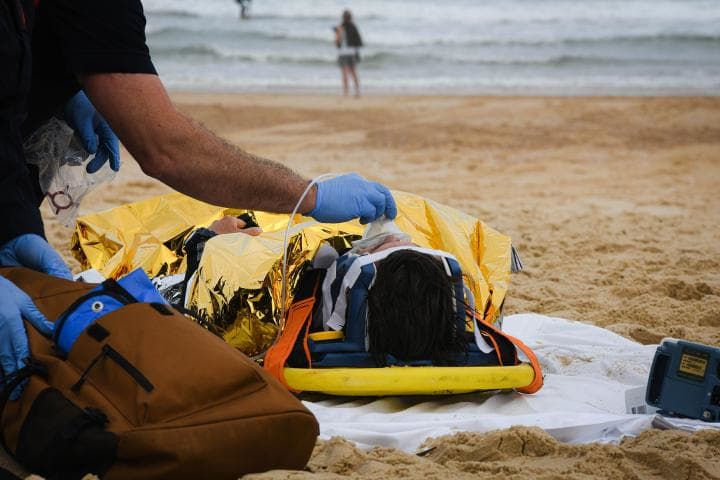
With shark bites, there are specific medical concerns that need to be taken into account. Lacerations are often very clean, but they can be very deep, and therefore, there are complications with blood vessel and nerve damage as well as broken bones, potentially complicating the injury. A hemorrhage is a major complication and needs to be addressed as an emergency with direct pressure or the application of a tourniquet to stem the flow. There may also be complications from near drowning as a result of being pulled underwater. Following the incident, emergency measures were swiftly implemented on shore to halt the bleeding, and the patient was promptly transferred to the local emergency department for stabilization once emergency measures were taken to stop the bleeding.
Initial Assessment and Air Ambulance Transfer to a Center of Medical Excellence
Our client’s Global Safety and Security Manager notified the Crisis24 Assistance team, who immediately contacted the patient’s father in Vanuatu to provide support. The patient was stable in the emergency department of a public facility with two deep lacerations on his right foot. The Crisis24 medical team assessed the situation and recommended an air ambulance transfer to Australia or New Zealand for definitive treatment, given the limited local capabilities and facilities. Since the patient was a dual New Zealand citizen with connections to New Zealand, the decision was to transfer to Auckland. Crisis 24 preferred air ambulance providers in the region were activated for availability and quotes.

Hospital Admission and Ongoing Monitoring
Arrangements were made for the patient to receive care at Starship Children’s Hospital in Auckland. The patient was evacuated and successfully admitted 27 hours after the incident, where they underwent two surgical procedures. The Crisis24 Assistance team continuously monitored their treatment throughout the process.
Results
The patient completed treatment in Auckland, and the Crisis24 medical team liaised with the patient’s treating clinical team to confirm the patient’s fitness for return home. Once the patient was deemed fit to be discharged and able to return home, one week later, Crisis24 supported the post-discharge arrangements, including arranging accommodation, flights, and ongoing rehabilitation.


Intelligence Analysis
Europe’s Extreme Heat and Wildfires Likely to Drive Recurring Seasonal Disruptions
Extreme heat and wildfires are becoming predictable features of Europe’s summer risk environment, increasing the likelihood of recurring operational disruption.
September 10, 2026

eBook
Insider Threat Management Playbook
A practical guide to identifying, investigating, and mitigating insider risk through a connected, cross-functional approach.
September 8, 2026

Intelligence Analysis
Asia-Pacific Food Security Risks Rise Amid Middle East Conflict
Explore how Middle East conflict, rising fuel and fertilizer costs, and El Niño could threaten APAC food security and regional stability through 2027.
September 4, 2026

Article
Balancing Trust, Privacy, and Monitoring in Insider Risk Programs
A strong Insider Threat Management Program (ITMP) should be designed to identify risk, vulnerability, and anomalous activity, not to create an organization in which every employee is treated as a potential offender.
September 2, 2026